
When Preparation Isn’t Enough
Many of you know that Skycall has long supported outdoor adventurers, hunters, backpackers, and explorers who venture far beyond cell coverage. Today, we want to share a true story written by our friend Cordell Anderson — a story that carries important lessons for anyone heading into the backcountry. This story is based on a book that he was writing and to be upfront, we are not sure if it ever published. We have lost contact with Cordell. If anyone has any contact with him please tell him to reach out to us.
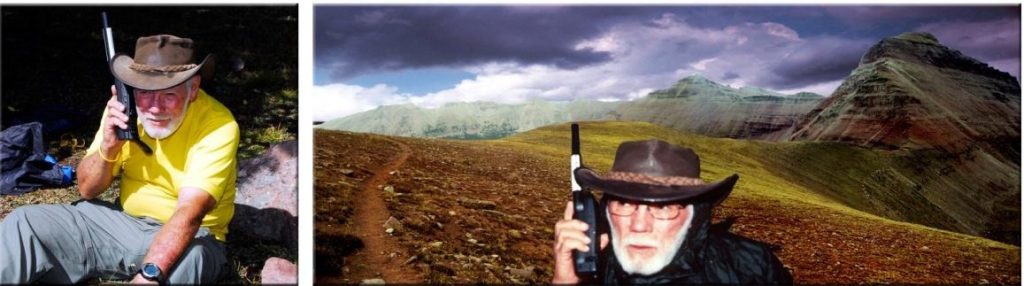
Lost on the Highline Trail — For Five Years
In July of 2011, Australian backpacker Eric Robinson began a 60-mile journey across Utah’s Highline Trail. He was not inexperienced. In fact, he had prepared carefully:
- He studied the route in detail.
- He carried a GPS device.
- He packed pepper spray for bears.
- He brought a Personal Locator Beacon (PLB).
- He left information about his itinerary.
On August 2nd, he was seen by a group of Boy Scouts — disoriented and off course. When he failed to arrive at the Hayden Pass Trailhead on August 7th, a massive search was launched by the Duchesne County Sheriff’s Office.
Search crews focused on the Yellowstone Creek drainage area where he was last seen. Despite extensive efforts, no trace was found. Eventually, the search was called off.
Five years later, in August 2016, two hikers discovered scattered gear — a red backpack, trekking poles, clothing, and a hiking boot containing bone fragments. An ID confirmed it was Eric Robinson.
The case was finally closed. Link to Salt Lake Tribune article: Click here
What Likely Happened
Speculation suggests Robinson corrected his initial navigation error and returned to the Highline Trail. However, heavy snow that year made Deadhorse Pass especially dangerous. He may have attempted a lesser-known mountaineer route toward Allsop Lake. Somewhere above steep cliffs, he slipped and fell.
We will never know every detail. But we can reflect on what might have made a difference.
This YouTube real gives you a great look at what Deadhorse Pass is like
The Critical Question: What Went Wrong?
Eric Robinson had a PLB — but it appears he never used it.
He did not have a satellite phone.
He was traveling alone.
In wilderness travel, equipment alone is not enough. Communication and decision-making are everything.
Cordell Anderson emphasizes four essential precautions for solo backcountry travel:
1. Leave a Detailed Itinerary
Share daily route plans and maps with family or friends. Duplicate them online if possible.
2. Carry a Satellite Phone
Plans change. Weather changes. Conditions change. A satellite phone allows you to:
- Report route changes
- Request assistance
- Narrow search areas if needed
- Coordinate pickup safely
3. Carry a Personal Locator Beacon (PLB) or Satellite Tracker
Devices such as SPOT or similar trackers can:
- Send daily “OK” check-ins to loved ones
- Share your precise GPS location
- Trigger immediate Search & Rescue response with a 911 alert
4. Use the Device Daily
Technology only helps if it’s used. A daily check-in dramatically narrows search areas and provides reassurance to family.
Smart Decisions Save Lives
Several safer options were available that might have avoided tragedy:
- Carefully navigating around snow rather than choosing a more dangerous alternate route
- Taking a safer descent route to reconnect with the main trail
- Exiting to a known trailhead and hitching a ride
- Using a satellite phone to coordinate pickup
The wilderness is unforgiving. Even experienced backpackers can face sudden danger.
The Lesson for All of Us
Being prepared means more than carrying gear. It means:
- Avoiding unnecessary risks
- Making conservative decisions
- Staying physically and mentally sharp
- Maintaining communication
Most tragedies in the backcountry are not caused by lack of skill — but by a series of small decisions made without the ability to communicate changes.
Stay Connected. Stay Safe.
At Skycall Communications, we believe no one should venture beyond cell service without reliable satellite communication.
We provide satellite phone and GPS emergency device rentals so hunters, hikers, climbers, and adventurers can:
- Stay in contact with family
- Update route changes
- Call for help immediately if needed
- Avoid prolonged search efforts
If you or someone you know is planning a backcountry trip, let’s make sure communication is part of the packing list.
📞 Contact Skycall Communications to reserve your satellite phone before your next adventure. 801-450-8317
Because the best wilderness story…
is the one you return home to tell.
Thank you Cordell Anderson – We hope you are living the good life.